01
Check the enclosure
The pad, walls, gates and the approach where bins roll out.

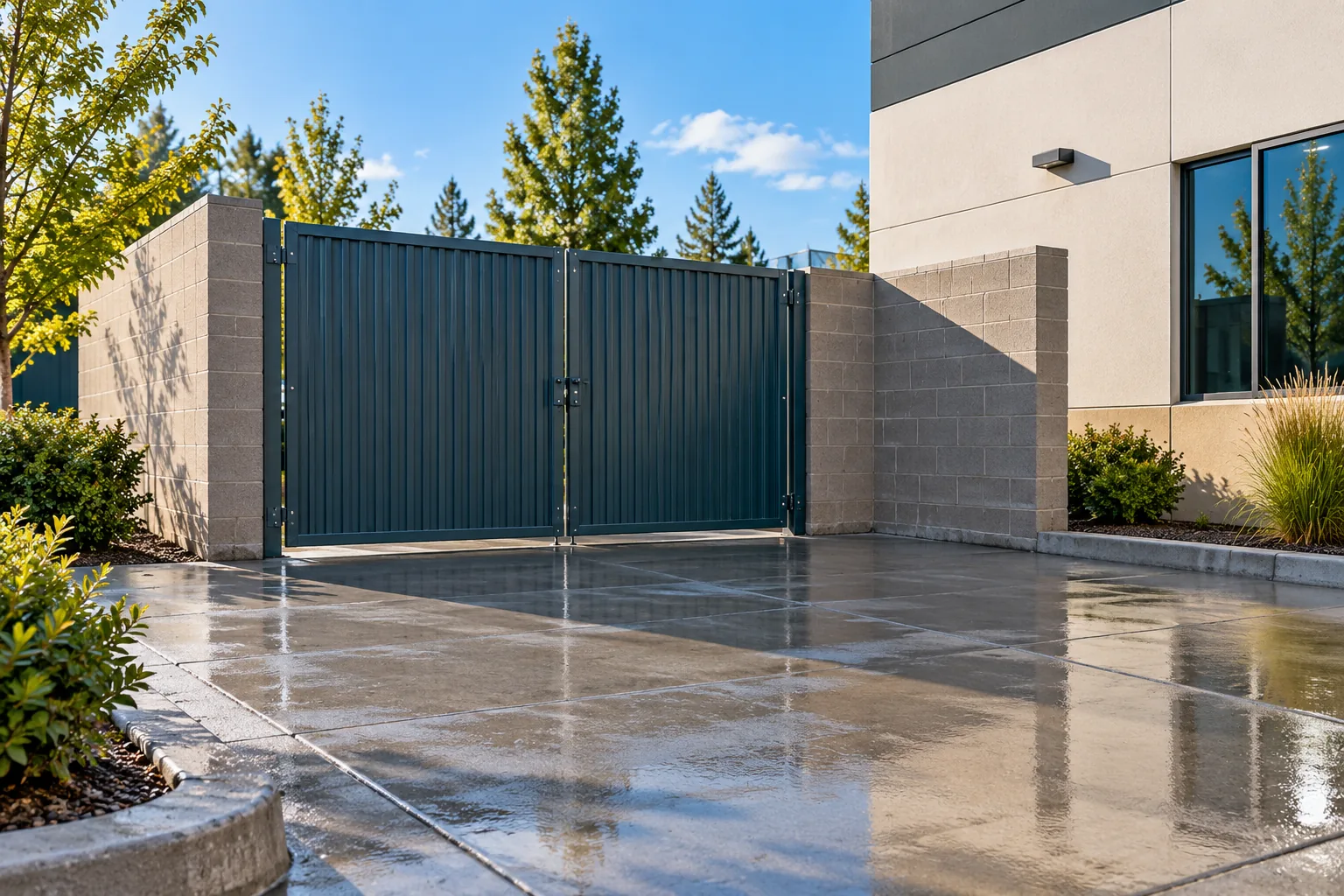
Dumpster pad and trash enclosure cleaning
Dumpster pad and trash enclosure cleaning that washes out grease, food spills, leaks and the odors that come with them.
Every trash enclosure gets worse over time. Bags split, bins leak, grease drips from kitchen waste and the concrete pad soaks it all in. In warm weather the smell travels, the pad gets slippery and the area attracts pests.
Raincrest washes the pad, the enclosure walls, the gates and the area in front of the enclosure where trucks and bins roll through. Grease and food residue get repeated passes until the concrete looks clean, and the storm drains nearest the enclosure are covered before washing starts.
The smell comes from residue soaked into the pad, so washing it out deals with the cause instead of masking it. Restaurants, grocery stores, apartment communities and shopping centers often set a monthly or quarterly enclosure schedule, which keeps the odor and the mess from building back up.
Step by step
01
The pad, walls, gates and the approach where bins roll out.
02
Storm drains near the work are covered before any water goes down.
03
Grease and residue get repeated passes until the pad is clean.
04
Monthly or quarterly visits keep the odor and mess from returning.
A trash enclosure takes in everything a property throws away. Bags split, bins leak, grease and food scraps drip from kitchen waste, and liquid pools at the low point of the pad. Concrete soaks it in, and with every warm afternoon the smell gets stronger. Flies and pests follow, and the pad gets slick underfoot for the staff who use it every day.
Washing the pad and walls takes away the residue that causes most of the odor and the slippery film. Enclosures washed on a regular cycle never get back to that point.
We start by checking the enclosure with whoever manages it, so bins can be rolled out or worked around. Loose trash is picked up, nearby storm drains are covered, and the pad, walls, gates and the approach where trucks pick up are washed in repeated passes until the concrete looks clean. Grease spots near the kitchen side of the enclosure get extra time.
Visits are timed around your pickup days, so the bins are as empty as possible. Restaurants often pair this with drive-thru and patio washing, and warehouses with dock cleaning on the same visit.
Restaurant and grocery enclosures carry the heaviest food waste and need a monthly wash. Shared enclosures behind a shopping center do well monthly or quarterly. Apartment trash areas belong on a regular cycle, because residents walk past them every day.
A typical trash enclosure of about 400 square feet costs roughly $140 to $400 a wash in published 2026 pricing. The pad is small, but grease and food waste take repeated passes, so the rate per foot runs high: about $0.35 behind an office, $0.40 at a grocery store and up to $1.00 behind a busy kitchen. The pressure washing cost guide shows how that compares with walkways and lots.
Most enclosures are small, so the visit total stays modest. A 400-square-foot grocery store enclosure, counting the pad, three walls, the gates and the apron where bins roll out, comes to $160 a wash at $0.40 a foot. Washed monthly, that’s $1,920 for the year. The same footage behind a busy kitchen, priced near the $1.00 end, runs about $400 a visit.
The biggest drivers are how much grease and food residue has soaked into the concrete, how long it has been since the last wash, and how often bins leak. Enclosures shared by several restaurants or an apartment community see heavier use and cost more per visit. Covering the nearest storm drains adds setup, and early-morning slots before trash pickup add scheduling. Monthly or quarterly service keeps each visit lighter than a one-time deep clean. Book a walkthrough and we’ll put your enclosure in a written quote.
A few useful answers
Restaurants and grocery stores often choose monthly. Office and retail enclosures usually do well quarterly.
Yes. Walls, gates and the approach are washed along with the pad.
Yes. Washing out the grease and food residue takes away what causes most of the odor.
Yes. Compactor pads and the concrete around them are washed along with the dumpster area.
Yes. Recycling and cardboard staging areas are part of the enclosure wash.
Yes. Washing right after pickup means the bins are close to empty and the pad is easier to reach.
Yes. Loose trash is cleared before washing, so the pad can be washed edge to edge.
Yes. Taking away the grease and food residue removes much of what draws flies to the pad.
Related services
Pick the surfaces that matter most and we’ll put them on one schedule.
01 / Restaurants
Drive-thru lanes, patios, entries and grease-stained concrete washed after close.
View details02 / Docks
Dock aprons, bays, ramps and walls cleared of tire marks, oil and debris.
View details03 / Concrete
Sidewalks, walkways, plazas and courtyards brought back to an even, bright finish.
View detailsIndustries