01 / Docks
Loading dock cleaning
Dock aprons, bays, ramps and walls cleared of tire marks, oil and debris.
View details
Warehouses
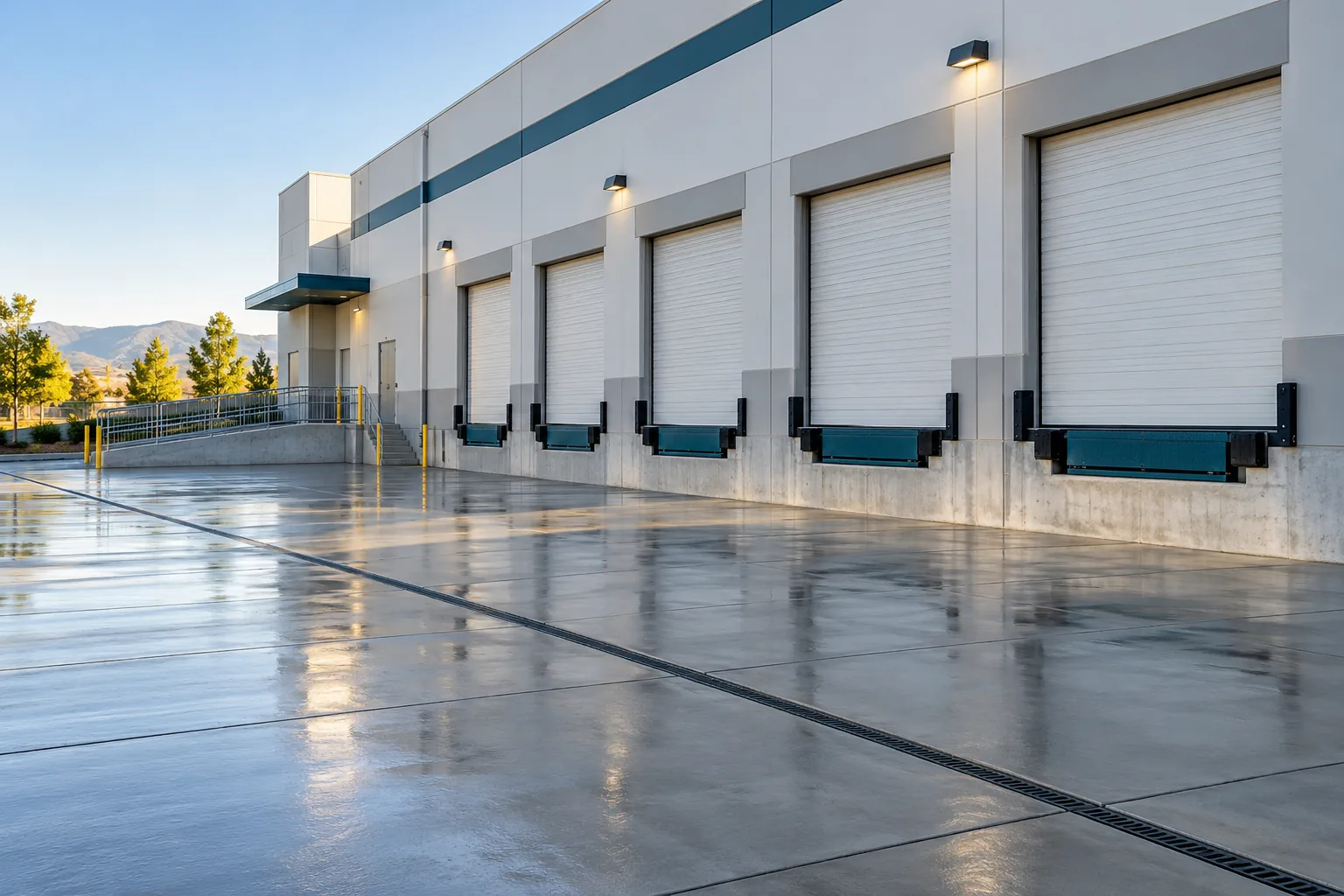
Warehouses run on their docks. We wash dock aprons, bays, truck courts, building walls and employee entrances around your receiving and shift schedule.
Distribution centers and warehouses are judged from the truck court as much as from the street. Raincrest washes the full exterior, from staging lanes and dock aprons to tilt-up walls, employee entrances and the compactor pad, and fits each part around how the building runs.
We fit the work around your receiving windows and shifts, washing bay by bay so the doors that need to stay open keep running. Dock aprons, truck wells and ramps get the most attention, followed by truck courts, the walls and doors around each bay, employee entrances and the compactor pad. Graffiti on long outer walls is removed before it spreads.
Services
Pick the surfaces that matter most and we’ll put them on one schedule.
01 / Docks
Dock aprons, bays, ramps and walls cleared of tire marks, oil and debris.
View details02 / Graffiti
Tags and spray paint taken off walls, doors, fences and enclosures.
View details03 / Parking
Oil drips, tire marks and grime washed from surface lots, garage decks and stairwells.
View detailsWarehouse exteriors work hard. Dock aprons and truck wells collect oil, coolant and tire marks, truck courts pick up the same and more, and the walls and doors around each bay turn dark with exhaust grime. Pallets, wrap and loose debris collect along the walls and block the drains in the wells.
We clear the debris first, then wash the wells, aprons, ramps and dock plates, the walls and doors around each bay and the truck courts and staging lanes. Fluid stains get extra passes, and employee entrances and outdoor break areas are washed so the people who work there notice the difference too.
A warehouse runs on a schedule, and so do we. Washing is planned with your operations team around receiving windows, shift changes and weekend downtime. Bays are washed in turn, so the doors you need stay open, and larger buildings are washed across a few visits. Truck courts are often washed on weekends, when trailer traffic is lightest.
Busy distribution docks do well on a monthly or quarterly cycle, with courts a little less often.
Long, blank tilt-up walls facing roads and rail lines are where graffiti tends to land. Washing the walls and removing tags on the same visit keeps the building looking well run to drivers and visitors. See loading dock cleaning for how a dock wash runs bay by bay.
Warehouses usually pay less per square foot than other properties because most of the concrete is wide, open truck court a crew covers quickly. Truck courts and staging lanes run about $0.11 to $0.17 a square foot in 2026 pricing, while dock aprons, truck wells and the walls around each door are slower, at $0.20 to $0.47, and docks with heavy oil, spilled product and exhaust grime climb higher. Truck traffic grinds tire marks and fluid into the slab, so busy yards need more passes than a quiet storage building.
Take a distribution building with 30,000 square feet of truck court and dock apron. At $0.14 a foot, each wash runs $4,200, and washing every quarter totals $16,800 a year. The dock bays and their walls, which need extra passes, are often priced as a separate line. Receiving windows, weekend access and how many bays stay open during the wash set the schedule, and a walkthrough produces a written quote. See commercial pressure washing costs for how docks compare with other surfaces.
A few useful answers
Yes. We wash bay by bay and leave open the doors you need for receiving.
Yes. Employee entrances, walkways and outdoor break areas are washed with the building.
Busy docks often choose monthly or quarterly, with truck courts washed a little less often.
Yes. Compactor and dumpster pads are washed out along with the dock and the walls around them.
Yes. Weekends are when most truck courts are washed, since trailer traffic is lightest then.
Loose debris and wrap are cleared before washing, so the drains in the truck wells stay open.
Yes. Tags on outer walls, doors and fences come off while the crew is there for the docks.
Industries