01 / Docks
Loading dock cleaning
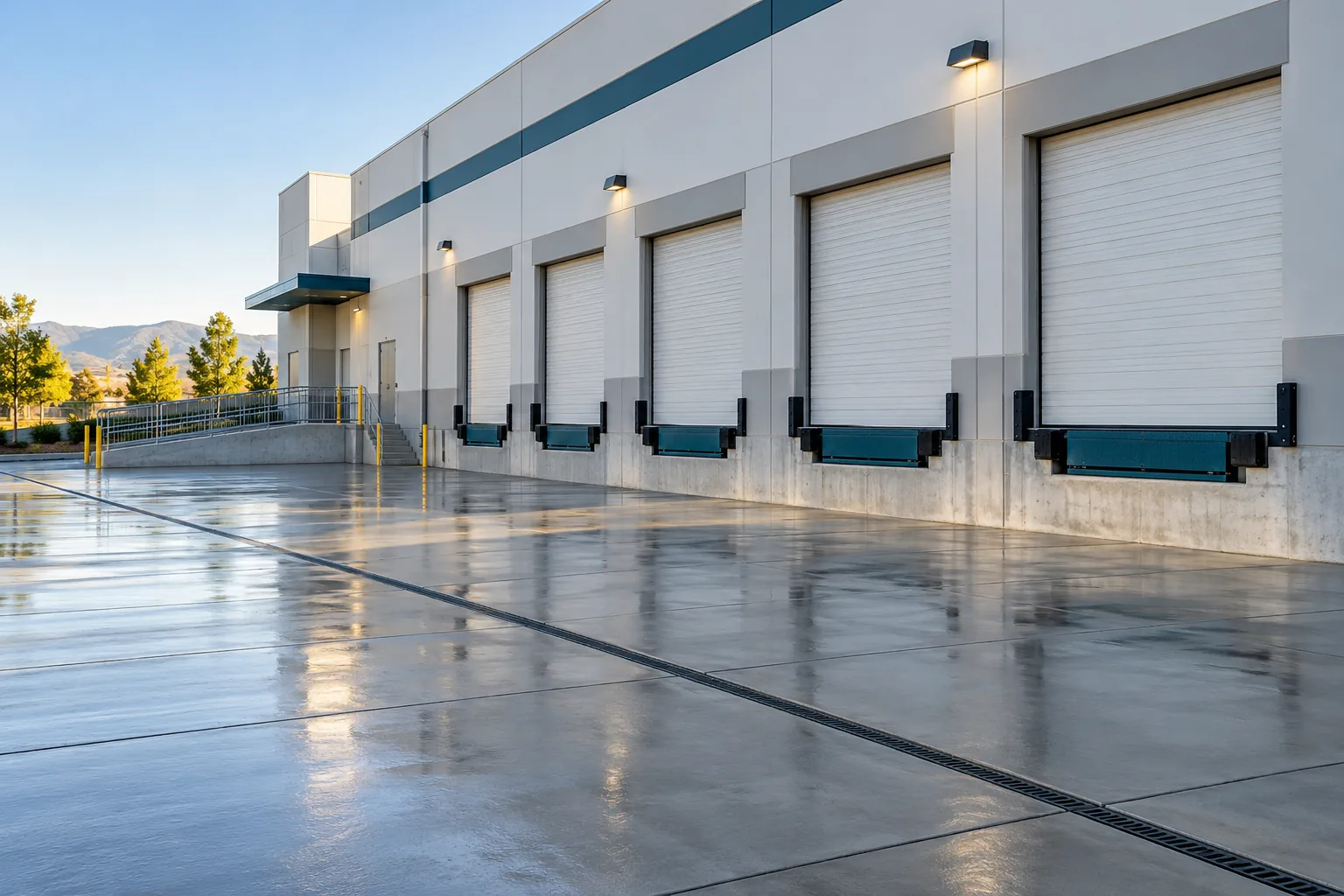
Dock aprons, bays, ramps and walls cleared of tire marks, oil and debris.
View details
Guide
A warehouse runs on its docks. Here’s how they get washed without missing a delivery.
Every truck that backs in leaves something behind. Oil and fluid drip onto the apron, tires carry in mud and road grit, and spilled product dries in the truck wells. Forklifts streak the ramps and dock plates with black tire marks, and exhaust leaves a dark band on the walls and doors around each bay.
Debris pushed into corners and drains adds to it. Over time the dock turns into the darkest, grimiest part of the building, even when the warehouse floor inside is kept spotless.
Drivers, auditors, customers touring the site and your own team all walk the dock. A clean apron and clear truck wells show a well-run operation. Your team gets a clearer view of the concrete they work on, and new spills or leaks stand out right away instead of disappearing into an already stained slab.
Clean walls and doors around each bay also make the building look better from the truck court, which is the view most visitors get. When a prospective tenant tours the building or a customer comes to see how their product is handled, a bright apron and clear truck wells tell them this warehouse takes care of the details.
A dock can’t simply close for a night. During the walkthrough we learn your receiving windows, shift changes and which doors have to stay open, then plan the wash bay by bay around them. A weekend or the quiet hours between the last outbound load and the first morning delivery usually work best.
Each bay is cleared of loose debris first so the drains stay open, then the apron, truck well, ramp and dock plate are washed and the walls and doors around the bay are cleaned. Oil and fluid stains get extra passes. The crew moves to the next bay once the last one is finished and checked.
The truck court is where most of the oil and tire grime starts. Trucks queue, idle and turn there, and staging lanes collect drips wherever trailers wait. Washing the court along with the docks keeps that grime from being tracked straight back into freshly cleaned bays.
Large truck courts are often washed in sections across more than one night, the same way a big parking field is. The employee lot can join the same visit through parking lot and garage washing.
Docks come first, but a few nearby areas round out the job. Trash and compactor pads near the docks collect leaks and smell. Employee entrances and outdoor break areas get daily foot traffic. Tilt-up walls facing the road pick up dust, and side walls along rail lines or alleys are common graffiti targets.
These can all share the same calendar. Our guide on why fast graffiti removal matters explains how standing checks work for outer walls.
How often a dock needs washing comes down to how hard it works. Distribution centers with steady truck traffic in and out wear their docks fastest. Warehouses that receive a few loads and ship by parcel can go much longer. Food and beverage operations, where spilled product turns sticky, usually need a tighter schedule than dry goods.
The schedule for each area is written into the quote after the walkthrough, and supervisors check the finished bays. See loading dock cleaning for everything we wash at the dock.
A few useful answers
Only one bay at a time. The crew works through them in order and keeps the doors you need for receiving open until their turn comes.
Yes. Dock plates, levelers and bumpers are washed along with the rest of each bay.
Busy distribution docks and food and beverage operations, where truck traffic and spilled product build up fastest.
Yes. The court is split into sections around the bays that stay open, so trucks can still reach their doors while the rest is washed.
Services
Docks and the lots around them can be washed in the same weekend window.
01 / Docks
Dock aprons, bays, ramps and walls cleared of tire marks, oil and debris.
View details02 / Parking
Oil drips, tire marks and grime washed from surface lots, garage decks and stairwells.
View details