01 / Parking
Parking lot and garage washing
Oil drips, tire marks and grime washed from surface lots, garage decks and stairwells.
View details
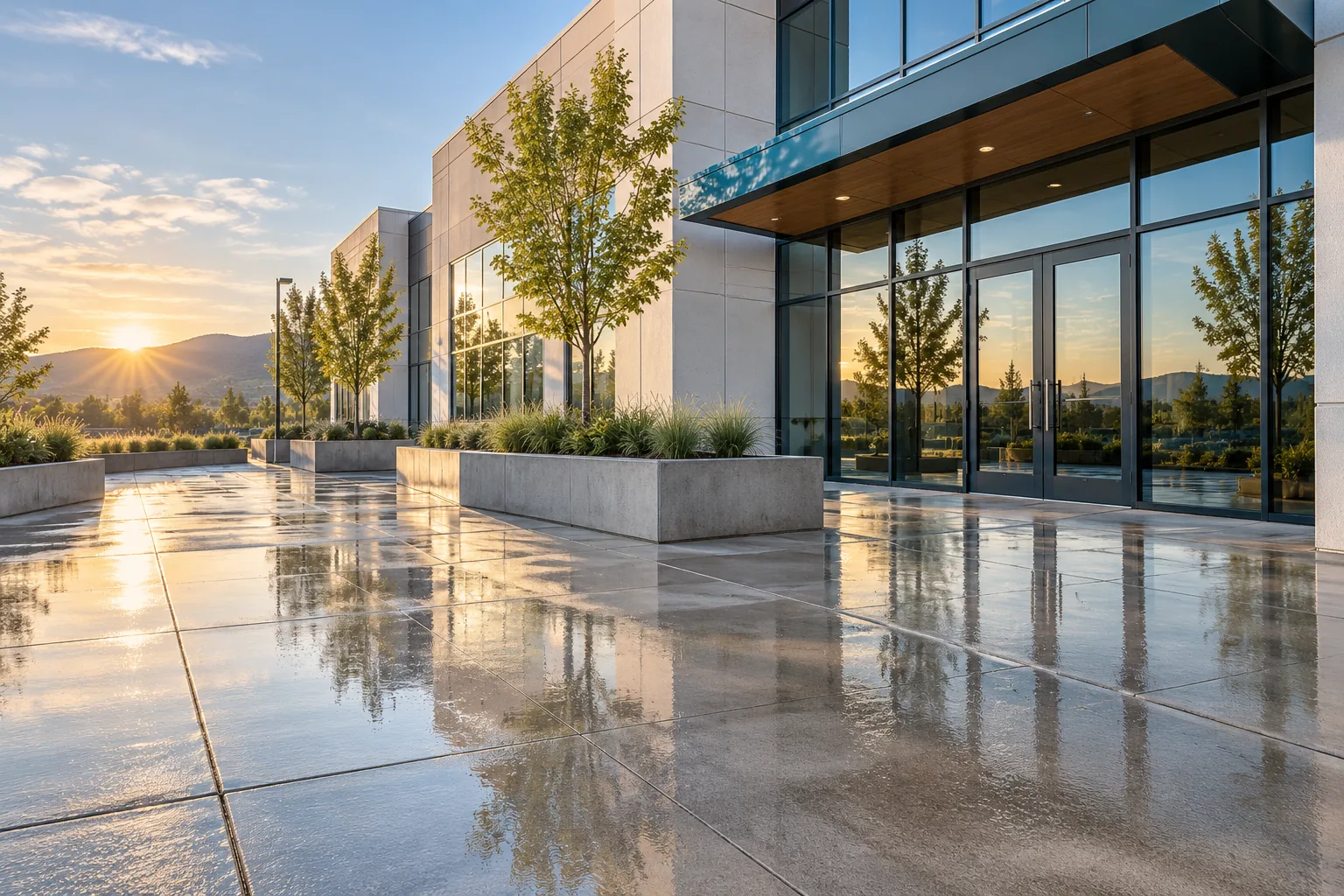
Guide
Most Raincrest washing happens while your property sleeps. A little groundwork the week before keeps the night on track and the morning clean.
Pressure washing needs room. Crews move section by section with hoses, cones and signs, and the best time to do that is when the parking lot is empty and the doors are locked. Washing early in the morning, overnight or on a weekend means customers never step around wet concrete and tenants never lose the way into their spaces.
It also means the property is clean and drying by the time the first employee pulls in, which is the moment most owners want to look their best.
A short notice goes a long way. Tell tenants, residents, night staff and any overnight security when the crew will be on site and which areas will be coned off. Retail tenants who take early deliveries and restaurants with early prep crews especially appreciate knowing which door or lane will be clear.
For apartment communities, posting the date a few days ahead keeps cars out of the carports and walkways on wash night. Our guide to pressure washing for apartment communities and HOAs goes deeper on resident notices.
A car parked over a stained stall keeps the crew from reaching the stain. If the lot or garage is on the quote, ask tenants to park elsewhere that night, or block off the sections being washed so the crew can work through them one at a time. Shopping carts, sandwich boards, patio furniture, rolling planters and anything else movable should be pulled back from the areas on the quote.
Anything that can’t move, such as fixed benches, bike racks and bollards, is washed around. Just point them out so the crew knows where they are before it gets dark.
Overnight work goes smoothest when nothing that needs to be open is locked. Make sure the crew can get into trash enclosures, gated lots, garage levels and any side yards on the quote. If the property’s lights run on timers, check that the areas being washed stay lit, or let us know which spots will be dark.
The water hookup is settled at the walkthrough. If a spigot sits inside a locked room or behind a gate, arrange a key or a code ahead of time so the crew isn’t left waiting.
Every property has a few surfaces that need a lighter touch or extra time. Fresh paint, older stucco, fabric awnings, wood trim and painted signs are handled gently. Oil stains, gum clusters by the front doors and grease around a kitchen exit get extra passes. Mention any of these again before wash night, especially if something has changed since the walkthrough.
If the night includes storefront and entryway washing, tell us which doors open first in the morning so those entries are finished early.
As the crew finishes each section, the cones and signs come down and the area reopens. Storm drains that were covered for the work are uncovered, and the property is left clean and drying. A supervisor walks the finished areas, so any spot that needs another pass gets one before the crew leaves.
The first people to arrive see bright entries, clean walkways and a lot that looks well kept. For garages and decks, our guide to parking garage washing explains how levels reopen one at a time.
A few useful answers
Usually not. Once gates, keys and the water hookup are sorted out ahead of time, the crew works through the night and leaves the property ready for the morning.
We talk it through and pick a new date when the weather suits the work, then let you know so the notices can be updated.
Yes. Larger centers, garages and communities are often washed over several nights, one section at a time.
Services
Most after-hours visits are for lots, garages and storefront walks.
01 / Parking
Oil drips, tire marks and grime washed from surface lots, garage decks and stairwells.
View details02 / Storefronts
Entrances, walkways, awnings and the concrete in front of the door, clean before you open.
View details