01 / Parking
Parking lot and garage washing
Oil drips, tire marks and grime washed from surface lots, garage decks and stairwells.
View details
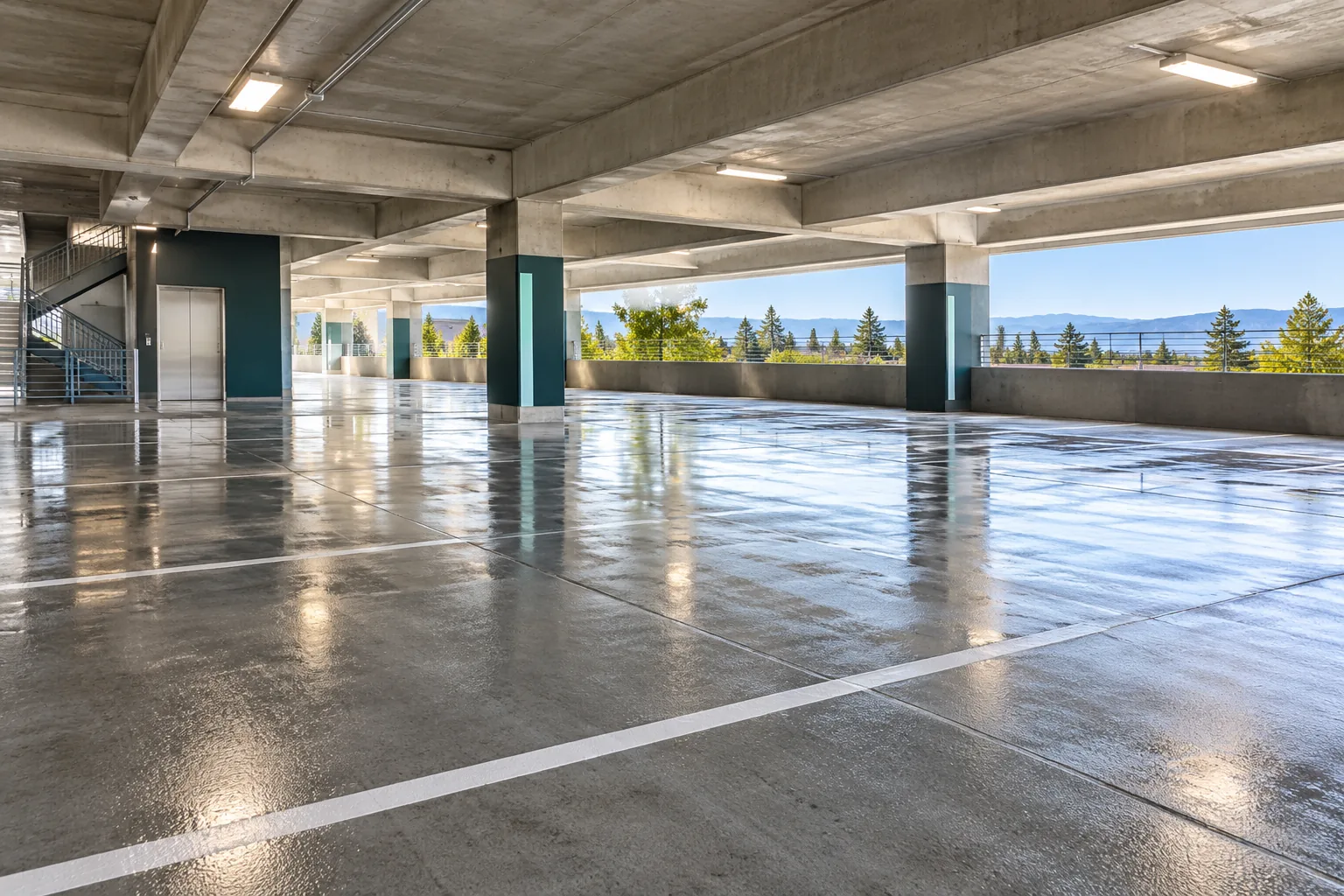
Parking Facilities
Parkers judge a facility by its decks and stairwells. We wash garage levels, ramps, stairwells, elevator lobbies and surface lots while the stalls are empty.
Parking operators and property managers need the structure open while it gets cleaned. Raincrest washes garages and surface lots section by section, so parkers always find a way in, and the stairwells and lobbies they remember get attention of their own.
Garages are washed level by level, usually overnight or on a weekend, with each section closed, washed and reopened before the next. Decks are washed toward their drains, oil spots at the stalls get extra passes, and ramps, stairwells, elevator lobbies and pay station areas are cleaned along the way. Surface lots follow the same section-by-section approach.
Services
Pick the surfaces that matter most and we’ll put them on one schedule.
01 / Parking
Oil drips, tire marks and grime washed from surface lots, garage decks and stairwells.
View details02 / Graffiti
Tags and spray paint taken off walls, doors, fences and enclosures.
View details03 / Concrete
Sidewalks, walkways, plazas and courtyards brought back to an even, bright finish.
View detailsParkers rarely comment on a clean deck, but they notice a sticky stairwell, a dim elevator lobby with stained floors or a pay station ringed with litter, and those are the spots that end up in complaints. They get the closest attention on every visit.
For an operator, the night is as much about planning as washing: notices, access and keeping revenue lanes moving. Each one is settled before the first cone goes down.
Most parking facilities can’t close, so we work in sections. Ahead of the night you get the dates and the order of levels, which is what the parker notices at your entries and pay stations need. Each level is coned off, washed and reopened before the next one closes, and entry and exit lanes are done one at a time so cars can always get in and pay on the way out.
Operators handing over gate codes for a night shift can rest easy: Raincrest is insured and bonded, and workers’ compensation covers everyone on the deck. The crew works from the access list you send, and a supervisor checks each level before it reopens.
Downtown garages see heavy daily use, so their stairwells do best on a monthly wash. Campus and office parking structures need their decks washed a few times a year, with stairwells in between. Graffiti on stairwell walls and columns comes off on the same visit.
For an operator, the useful figure is what one full wash of the facility costs and how often it repeats. Most of a garage or lot is open deck, which sits at the low end of the price scale as of 2026, while stairwells, lobbies and ramps take more time per foot. Rates by surface sit beside the washing method on our parking lot and garage washing page.
Imagine a 60,000-square-foot surface lot at a life-science campus. At $0.13 a foot in 2026, each wash costs $7,800, and twice a year it totals $15,600. Oil spots at the head of each stall, cart corrals, how many sections must stay open while the crew works, and whether the wash runs overnight all move the figure. Lots washed more often build up less between visits, so each wash goes faster. Garages with poor drainage take longer, since each level is washed toward its drains. A walkthrough of the lot and garage produces a written quote, and the commercial washing cost guide has more worked examples.
A few useful answers
Yes. You get the wash dates and the order of levels ahead of time, so notices can go up at the entries and pay stations a few days early.
Yes. Tags on stairwell walls, columns and doors are removed while the crew is on site for the decks.
Yes. Entry lanes, pay stations and the walkways around them are part of every visit.
Yes. Entry and exit lanes are washed one at a time in the quietest hour, so cars can always get in and pay on the way out.
Yes. Garage exits, pedestrian walkways and the sidewalk outside are washed along with the decks.
Busy garages often wash stairwells monthly, because that’s where parkers spend the most time on foot.
Gate or access codes, a contact for the night and any levels or stalls that must stay open. The crew works from that list.