01 / Enclosures
Dumpster pad and trash enclosure cleaning
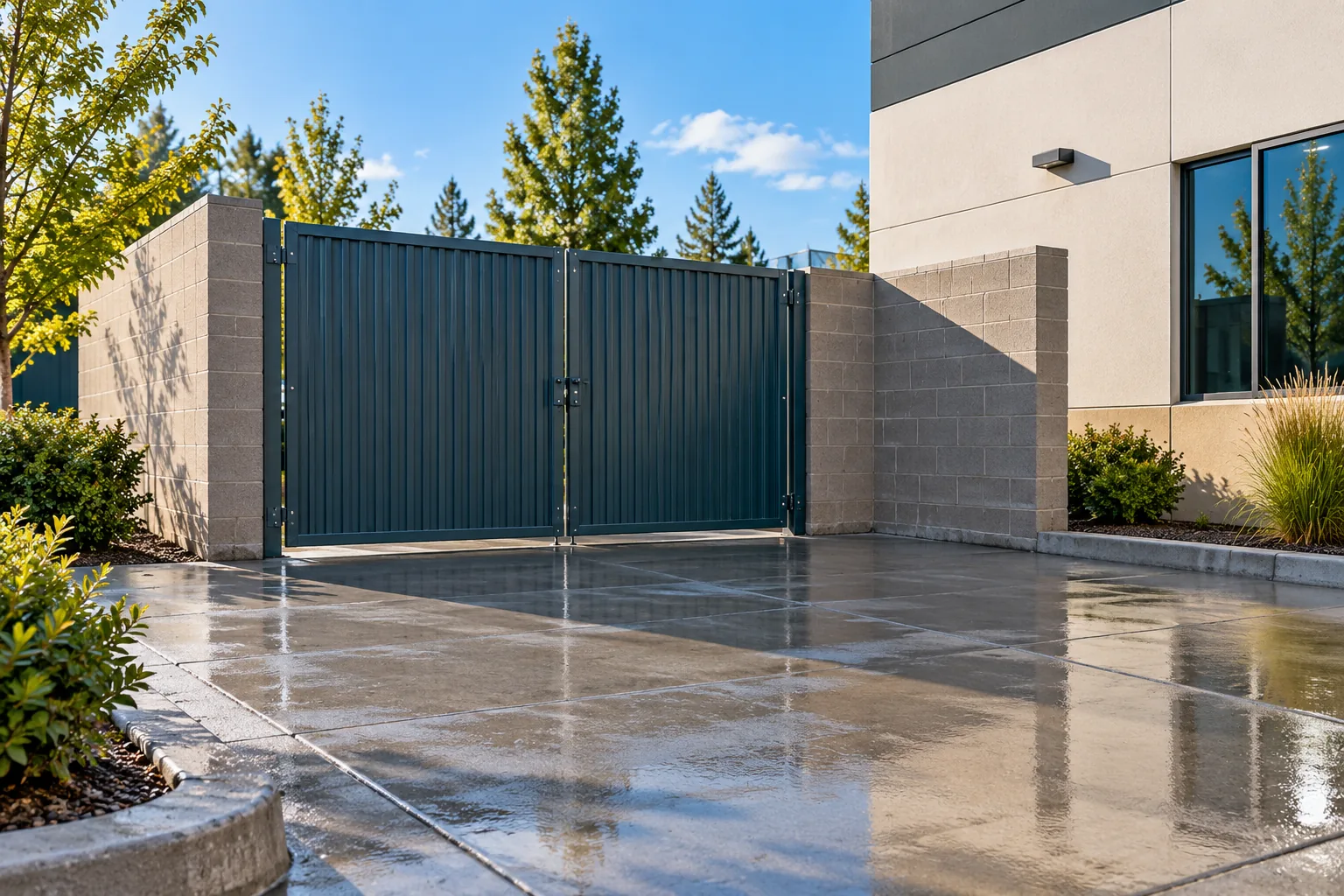
Grease, spills and odors washed out of dumpster pads and trash enclosures.
View details
Guide
A freshly washed enclosure is a great start. What happens in the weeks after decides how long it stays that way.
A trash enclosure is where everything leaky on a property ends up. Bags split as they’re tossed, bins drip when they’re full, and food scraps, coffee grounds and liquids work their way onto the pad. In a restaurant or grocery enclosure, grease from kitchen waste joins in. Concrete soaks all of it up, and in warm weather the smell gets stronger by the day.
Washing clears that residue out of the concrete, but the pad starts collecting again the next morning. A few habits from staff and tenants slow that process down, and they take nothing more than a little attention.
Most enclosure mess comes from a handful of moments: a bag dragged across the pad, an overfilled bin with the lid propped open, a spill nobody wanted to deal with at the end of a shift. Ask staff to carry bags all the way into the bin rather than tossing them, keep lids closed so rain and birds stay out, and break down cardboard so it doesn’t block the gate.
When something does spill, picking it up right away keeps it from soaking in. A shovel and a broom kept near the enclosure make that easy, and a quick sweep at the end of each day keeps loose debris from building into a sticky layer.
In food businesses, grease is the biggest single source of stains and odor. Keep used cooking grease in its own closed container and away from the regular trash. Wipe drips off the outside of grease containers before they reach the concrete, and watch for leaks at the base.
The concrete around grease containers and kitchen doors usually needs extra passes on wash day, and our restaurant exterior checklist shows how that area fits with the rest of the property.
The pad isn’t the only part of the enclosure that gets dirty. Walls pick up splashes and smears at bin height, gates collect grime where hands push them open, and the concrete in front of the enclosure darkens where bins are rolled out and trucks pull up. Closing the gate after every trip keeps blown trash and animals out, and keeping the approach swept helps it look cared for from the parking lot.
On wash day, Raincrest cleans all of it together: pad, walls, gates and the approach. Before any water goes down, the closest storm drains are covered so runoff stays contained around the enclosure.
How often an enclosure needs washing comes down to what goes into it. Restaurant and grocery enclosures, with food waste and grease, need the most frequent visits. Enclosures shared by many apartment households fill fast and see a lot of traffic. Office and light retail enclosures, with mostly paper and packaging, can go longer between visits.
Heat matters too. Around Sacramento and Stockton, summer warmth turns a dirty pad into a strong smell fast, so tighten the schedule through the hot months. The right schedule for each enclosure is set during the walkthrough and written into your quote for dumpster pad and trash enclosure cleaning.
Between scheduled visits, a few signs tell you an enclosure is ready: a smell you notice before you reach the gate, a pad that feels slick underfoot, dark stains spreading out toward the parking lot or flies gathering on warm afternoons. If you see these before the next visit is due, the visit should come forward, and we’ll adjust the calendar.
Supervisors also keep an eye on how quickly each enclosure comes back after a wash, so the schedule gets more accurate over time.
A few useful answers
Keep lids closed and pick up spills the same day. Those two habits keep most of the residue and smell from building up.
Yes. All the enclosures on a property can be washed in one trip, on one calendar.
Yes. Washing out food residue and grease takes away much of what draws flies, birds and rodents to an enclosure.
Services
Enclosures are often washed on the same night as the restaurant’s back door.
01 / Enclosures
Grease, spills and odors washed out of dumpster pads and trash enclosures.
View details02 / Restaurants
Drive-thru lanes, patios, entries and grease-stained concrete washed after close.
View details