01 / Facades
Building exterior washing
Stucco, block, brick, siding and trim washed clean of dust, grime and streaks.
View details
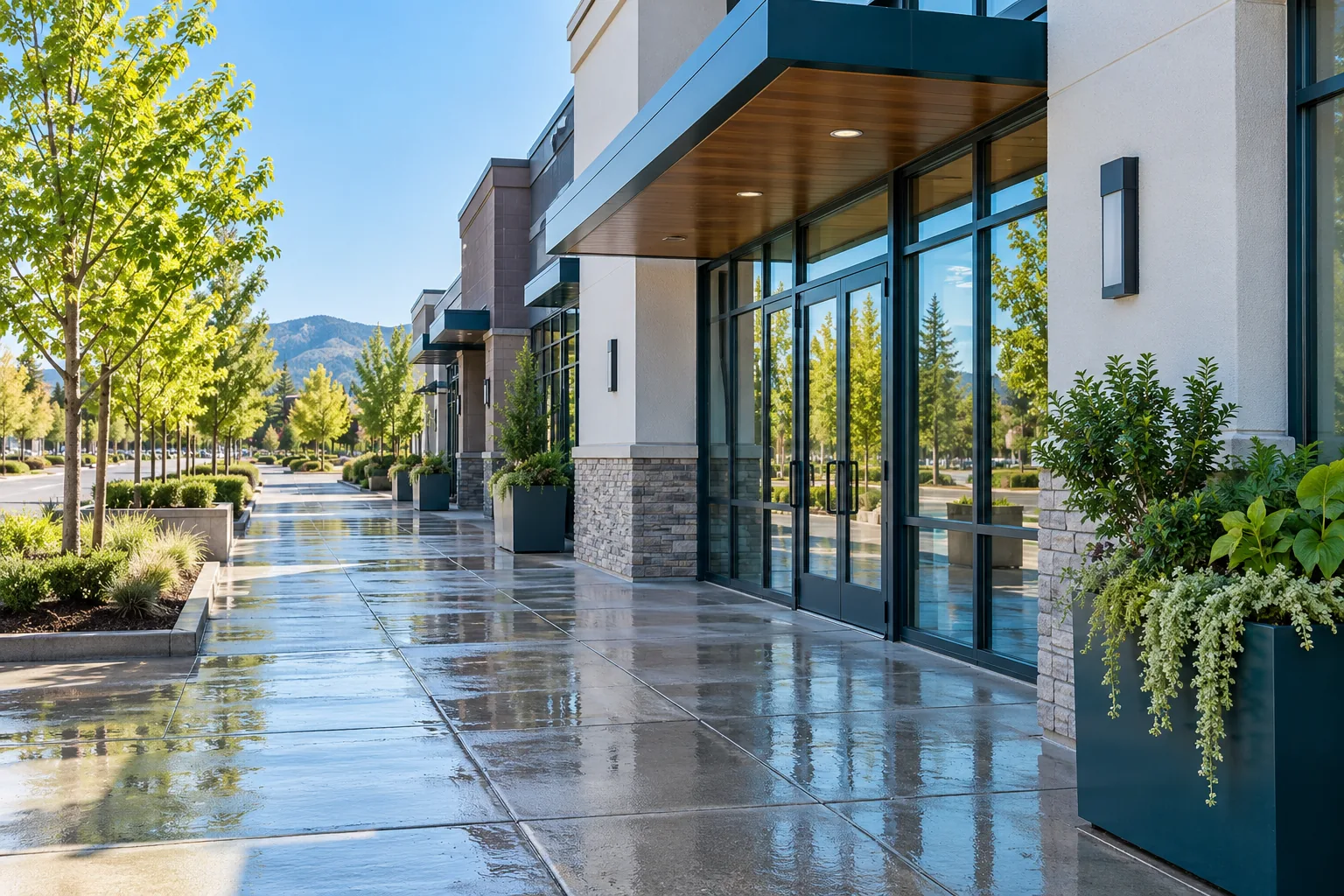
Guide
Each season leaves its own mark on concrete, walls and lots. Here’s what to expect through the year and when to time the washing.
Exterior dirt follows the weather. The same walkway that looks fine in October can be streaked with mud by December, coated in yellow pollen by April and dusty gray by August. Timing the bigger washes around those changes means the property looks its best when it matters, and the washing works with the season instead of against it.
The schedule for entries, enclosures and other busy spots carries on all year. The seasonal calendar is about when to fit in the larger jobs, like full facade washing, deep plaza cleaning and parking lots.
After a long dry summer, the first storms of fall do a messy job of cleaning. Rain carries a season of dust, leaves and bird droppings off roofs and awnings and streaks it down walls. Leaves pile up in corners and on walkways, then leave dark stains when they sit wet. Oil that baked into parking stalls all summer spreads into rainbow slicks.
Late summer or early fall is a smart time to wash parking lots and garage entries before the rain arrives, and a walk of the property after the first big storm shows which walls and walks need attention. Across the Bay Area, from San Francisco and Oakland to San Jose and Fremont, this is often the season for clearing leaf stains from plazas and courtyards.
Through the Northern California winter, concrete under trees and on the shaded sides of buildings stays damp, and a green or black film can creep across walkways and stucco. Washing those shaded areas during a dry stretch keeps that film from taking hold. Entries need regular attention too, since wet shoes carry more dirt to the door.
Reno winters are different. Snow, freezing nights and the sand spread on lots and walkways leave a gritty layer that gets tracked into every entrance. When the snow season eases, a thorough wash of entries, walks, parking areas and the lower walls splashed by plows and tires clears that grit away.
Spring brings a yellow-green coat of pollen to every horizontal surface, especially in tree-lined places like Santa Rosa, Palo Alto and Sacramento. Blossoms and seed pods drop on walkways and stain concrete as they break down, and sap lands on the parking stalls below. Pollen also clings to awnings, window ledges and signs.
Late spring, once the heaviest pollen has fallen, is the best time for full building exterior washing and plaza cleaning. It’s also when apartment communities and HOAs often wash pool decks and amenity areas before the summer crowd arrives. Our guide to washing apartment and HOA common areas has more on that timing.
Long, dry summers leave a fine film of dust on walls, walks and lots, and inland the heat is part of the story. In Sacramento, Elk Grove and Stockton, hot afternoons bake spills into the concrete and turn dumpster pads and restaurant back doors into strong smells fast. Patios and outdoor dining areas see their heaviest use of the year.
Summer is the season to tighten the schedule on enclosures, drive-thrus and patios, and the long dry spell suits washing surfaces that need time to dry. Early-morning visits keep the crew working in the cooler hours. Our guide on keeping dumpster pads clean between washes covers summer odor.
A year-round plan combines the steady visits for entries, enclosures and other busy spots with a few seasonal jobs: lots before the rain, shaded walks during winter dry spells, a Reno grit cleanup as the snow eases, facades and plazas after the pollen and tighter enclosure washing through the heat. During the on-site walkthrough we map those needs to your property and write them into one quote.
From there, background-checked crews arrive early, late or on weekends, and supervisors check the results. Our guide on how often to pressure wash a commercial property explains what sets the steady schedule underneath it all.
A few useful answers
Late spring or early summer suits most properties, after the pollen has settled and before the dusty months, with Reno buildings washed once the snow is behind them.
Yes. Washing oil and grime out before the first storms keeps it from spreading into slick patches across the lot.
Washing moves around the weather. Crews pick dry, milder days, and the big grit cleanup follows the last of the snow.
Services
Walls and walkways are the two surfaces the seasons change most.
01 / Facades
Stucco, block, brick, siding and trim washed clean of dust, grime and streaks.
View details02 / Concrete
Sidewalks, walkways, plazas and courtyards brought back to an even, bright finish.
View details