01
Walk the dock
Bays, aprons, ramps, walls and the stains that need extra passes.

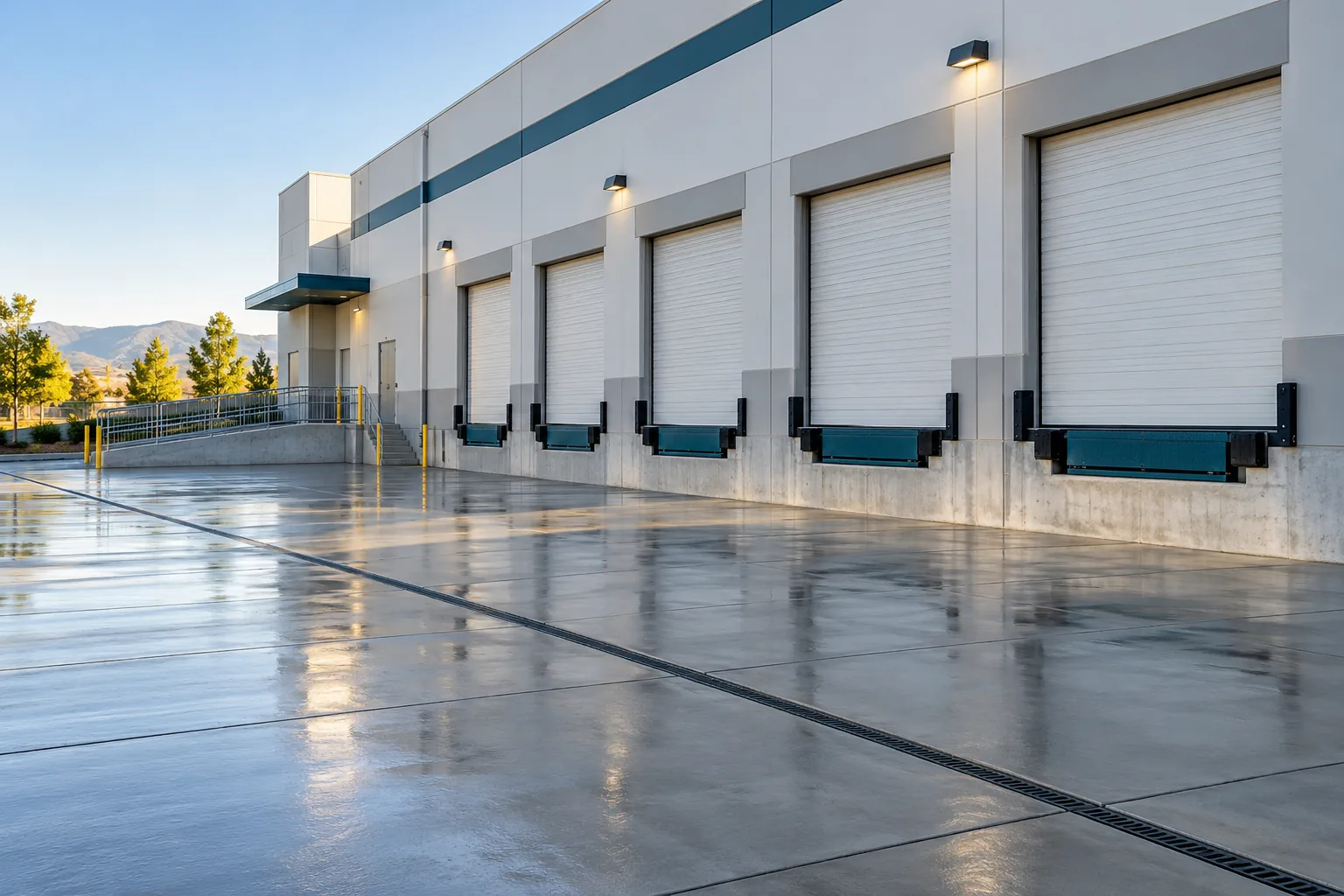
Loading dock cleaning
Loading dock cleaning for dock aprons, bays, ramps, bumpers and walls, washed clear of tire marks, oil, spilled product and debris.
Loading docks take a beating. Trucks drip oil on the apron, forklifts leave tire marks on the ramps, spilled product dries in the bays and the walls around the doors collect a dark band of exhaust grime.
Raincrest washes dock aprons, truck wells, ramps, dock plates and the walls and doors around each bay. Oil and fluid stains get extra passes, and loose debris is cleared before washing so the drains stay clear. We schedule around your receiving windows, between shifts or on the weekend, so the dock never stops working.
A clean dock looks better to drivers, auditors and visitors, and crews can see the surface they are working on.
Step by step
01
Bays, aprons, ramps, walls and the stains that need extra passes.
02
Washing is timed around receiving, shifts and weekend downtime.
03
Debris is cleared first, then each bay is washed in turn.
04
The dock is clean and ready for the next truck.
Docks see more traffic than almost any other part of a building. Trucks leave oil, coolant and tire marks in the wells and on the apron. Forklifts and pallet jacks track dirt up the ramps and across the dock plates. Spilled product, shrink wrap and broken pallets collect in corners, and exhaust leaves a dark band of grime on the walls and doors around each bay.
We clear the loose debris first, so the drains in the truck wells stay open, then wash the wells, aprons and ramps with extra passes on fluid stains. The walls and doors around each bay are washed from top to bottom, and the employee walkways beside the dock are washed last.
The dock can’t stop for a cleaning, so the cleaning works around it. We plan the order with your shipping and receiving lead, wash the quietest bays first and leave open the doors you need. Overnight, between shifts and weekend downtime are the usual windows, and larger docks are often washed across more than one visit.
Wash busy docks monthly or quarterly and the truck courts less often. Adding the compactor pad and graffiti on outer walls to the same visit keeps the back of the building as tidy as the front.
Distribution centers, warehouses, grocery stores and manufacturing plants all depend on their docks, and a clean dock tells drivers, visitors and auditors the operation is well run. Read more about how we wash warehouses and distribution buildings.
Docks and truck courts price differently. Open truck courts and staging lanes wash fast, at about $0.11 to $0.17 a square foot, while aprons, truck wells, ramps and bay walls take slower work and usually run $0.20 to $0.47, reaching about $1.00 when oil and spilled product are caked on. Market data for 2026 sets those ranges, and the commercial washing cost guide puts them beside every other surface.
Consider a six-bay food distribution building with 4,800 square feet of apron, wells and dock walls. At $0.28 a foot, one wash costs $1,344. Washing every other month, six times a year, totals $8,064, and adding the dock plates and doors to each visit nudges that higher.
Oil and hydraulic fluid stains, dried product in the bays and the dark exhaust band around each door all add passes. The number of bays and how tightly receiving windows box in the crew shape the schedule, and between-shift or weekend washing changes the labor plan. Clearing debris first so drains stay open, and covering storm drains near the work, adds setup on busy docks. Docks on a regular schedule cost less per visit than ones washed once a year. A walkthrough timed around your receiving hours leads to a written quote.
A few useful answers
Yes. We wash between receiving windows, overnight or on the weekend.
Yes. Truck courts and staging lanes can be washed with the docks.
Yes. We wash bay by bay, so the doors that need to stay open can keep running.
Yes. The dark band of grime around each door is washed off along with the bay.
Yes. Monthly or quarterly visits keep the buildup on a busy dock from getting ahead.
Yes. Dock plates, the top of each leveler and the ramps leading to them are washed with the bay.
Yes. Truck wells are cleared of debris and washed, with fluid stains given extra passes.
Yes. Grocery receiving docks are washed around delivery times, often with the compactor pad on the same visit.
Related services
Pick the surfaces that matter most and we’ll put them on one schedule.
01 / Parking
Oil drips, tire marks and grime washed from surface lots, garage decks and stairwells.
View details02 / Enclosures
Grease, spills and odors washed out of dumpster pads and trash enclosures.
View details03 / Facades
Stucco, block, brick, siding and trim washed clean of dust, grime and streaks.
View detailsIndustries
Resources