01 / Facades
Building exterior washing
Stucco, block, brick, siding and trim washed clean of dust, grime and streaks.
View details
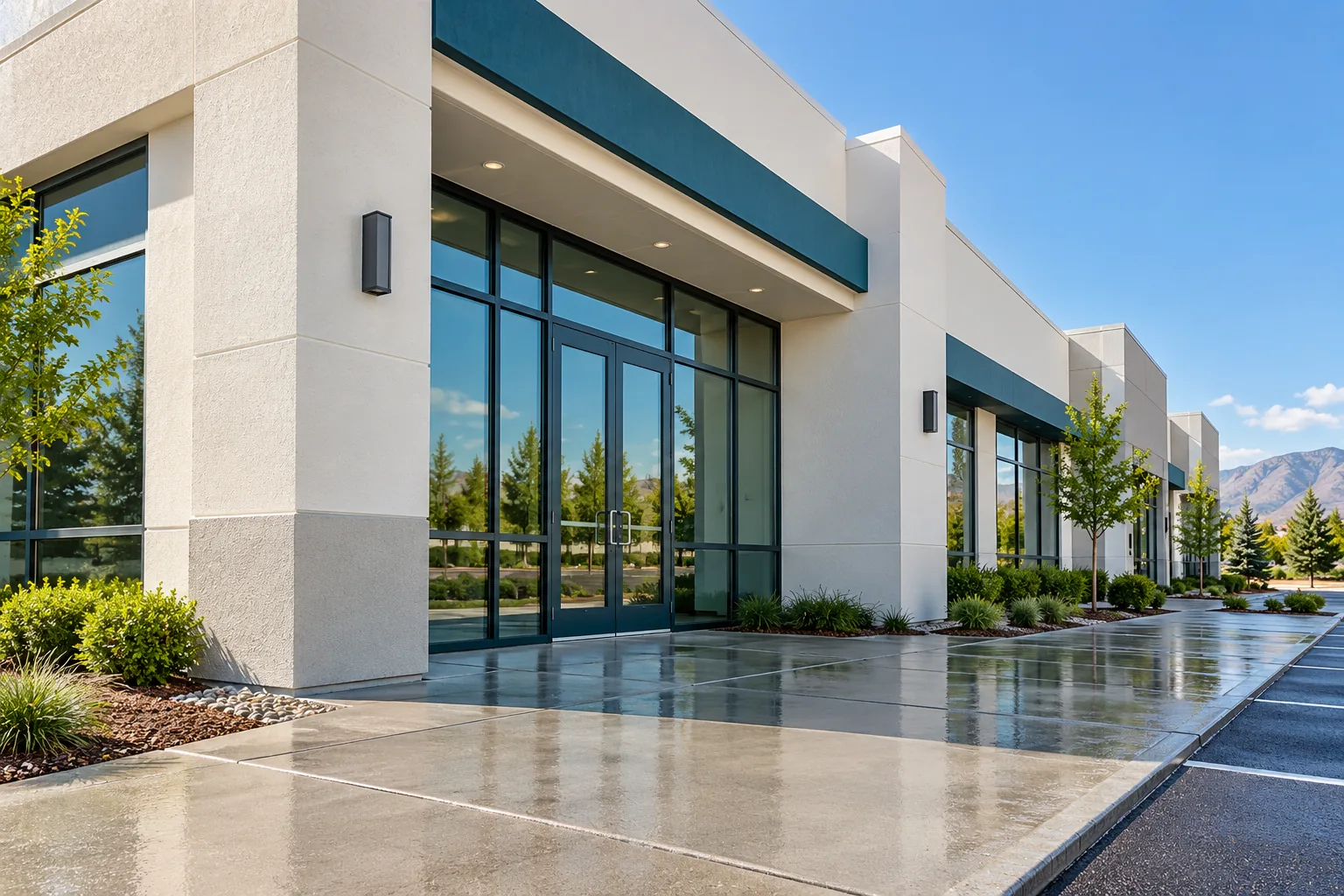
Guide
A new coat of paint is only as good as the wall under it. Here’s why the wash comes first and how to line it up with the painting crew.
When paint goes onto a dusty wall, it bonds to the dust instead of the wall. That thin layer of road film, pollen and grime can let a new coat lift, blister or peel long before its time, and a repaint is too big an investment to put on a weak base. That’s why painters ask for a clean wall before they open the first can.
Dirt also changes how the finished color reads. Streaks and shaded-wall film rolled over with a light color can ghost through the new coat, and the wall ends up looking uneven on day one.
Clean walls also help the painters work faster and more evenly. Rollers and sprayers glide over a washed surface, and the crew isn’t stopping to brush off cobwebs or wipe grime from trim as it goes.
A pre-paint wash clears what sits between the old coat and the new one: dust, cobwebs, droppings under the eaves, the dark streaks below ledges and the gray film on shaded walls. It also cleans window frames, trim and the base of each wall, where splashed soil builds up.
On older painted walls, the wash also shows how the existing coat is holding up. Weak or flaking areas become obvious once the surface dirt is gone, which gives your painter a clear picture of the prep each wall needs. Scraping, patching and priming then fall to the painting crew.
Timing matters. Wash too early and a few weeks of dust, pollen or a passing storm can undo the work before the painters arrive. Wash too late and the walls are still damp when the crew wants to start. The simplest plan is to set the paint start date first, then work backward with your painter to choose the wash date.
Ask the painting contractor how dry they want the walls and what they check before priming. Writing their answer into the plan keeps both crews working from the same page.
Large properties are often washed and painted in a rolling order, one building or elevation at a time, so the painters follow the wash around the site. A facade cleaning scope of work lists that order elevation by elevation.
Stucco, block and brick hold water after a wash, and the inside of the wall stays damp after the face looks dry. Paint over a wet wall can trap that moisture, a common cause of bubbling and peeling. Shade and cool, damp weather slow drying down, so a north wall in early spring needs more time than a sunny south wall in summer.
Painters often check the walls before they start, and many prefer to begin on the elevations that dried first. Our guide to commercial stucco cleaning explains why shaded walls hold dampness and film longer than the rest.
Weather plays the biggest part in the schedule. A run of dry, mild days suits both the wash and the paint, and a forecast of rain is a good reason to slide both dates together.
A pre-paint wash covers more wall in one go than a routine refresh, so the setup matters. Doors, windows, light fixtures and electrical boxes are protected before washing begins, and walls are washed from the top down so dirty water never runs across a finished section. The storm drains nearest the work are covered before the first pass.
Tenants and residents need to know which buildings are on the list and when. At apartment communities and shopping centers, the notice for the wash and the notice for the paint can go out together. Our guide to shopping center common-area cleaning covers how work moves around open storefronts.
Anything movable near the walls, such as planters, benches or bike racks, only has to be set aside once when both crews work from the same plan, and the planting beds below get a rinse after washing.
A repaint is a natural time to bring the whole property up to the same standard. Fresh walls beside stained walkways, a gray monument sign or a dark trash enclosure look out of place, so book the concrete, entries and enclosures for a visit right after the painters finish.
Bring the paint dates to the walkthrough, and the wash goes into the written quote ahead of the painters. See building exterior washing for the walls and surfaces Raincrest washes.
Once the new paint is on, a gentle wash once or twice a year keeps the color bright and the streaks from returning.
A few useful answers
Close enough that dust and pollen don’t settle back, and early enough for the walls to dry fully. Set the date with your painter, who knows how dry they want each wall.
Yes, when the weather is dry and the painter confirms the walls are ready. Large sites often run both in a rolling order, one building at a time.
Yes. Paint bonds to whatever sits on the wall, so washing first gives the new coat a sound, clean surface to grip.
The wash is set for cleaning, with a lighter touch on painted surfaces. Paint that is already loose can come away, which shows the painter exactly where scraping is needed.
Services
A pre-paint wash often brings the walkways below along with it.
01 / Facades
Stucco, block, brick, siding and trim washed clean of dust, grime and streaks.
View details02 / Concrete
Sidewalks, walkways, plazas and courtyards brought back to an even, bright finish.
View details