01 / Storefronts
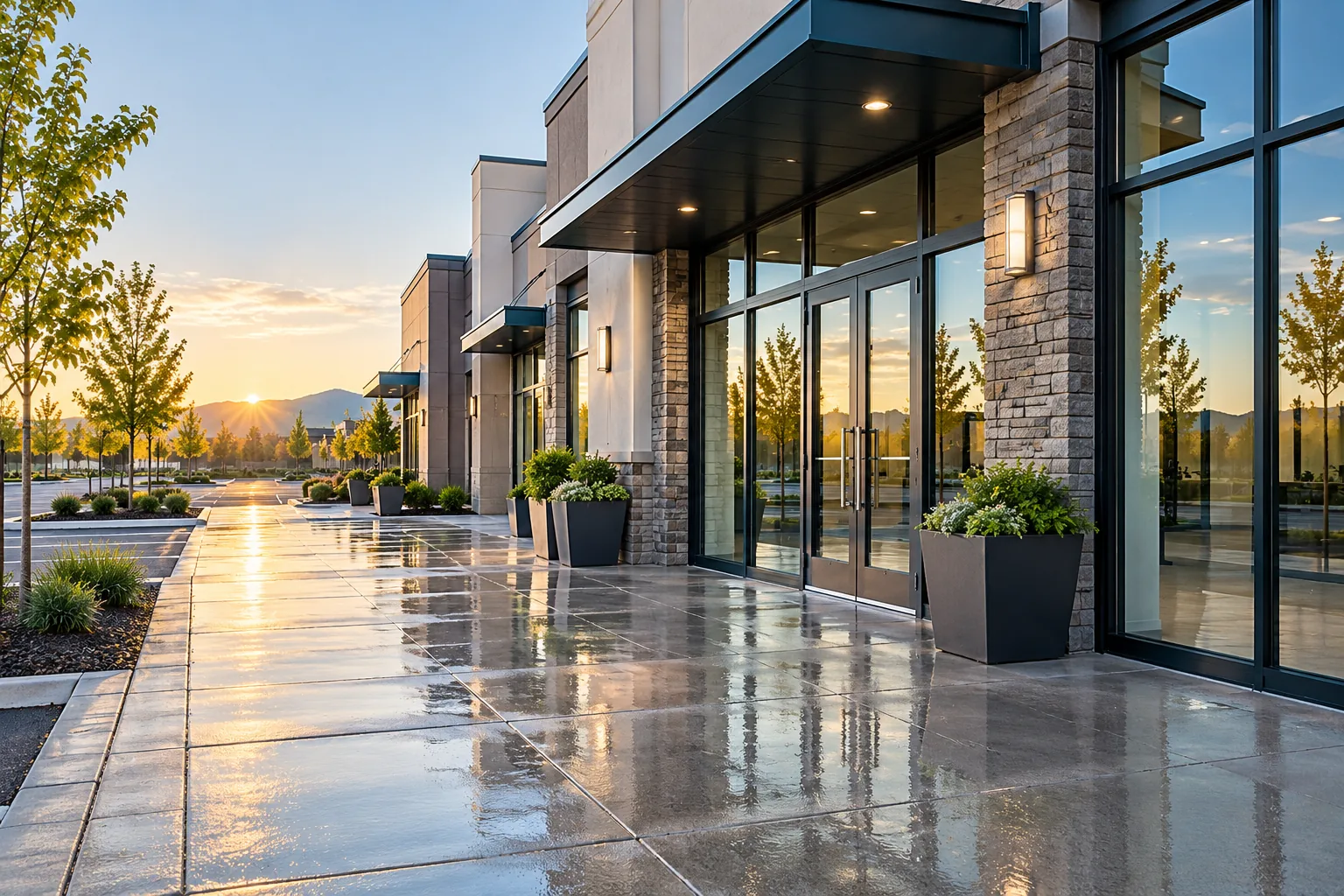
Storefront and entryway washing
Entrances, walkways, awnings and the concrete in front of the door, clean before you open.
View details
Guide
Shoppers judge a center by the spaces between the stores. Here’s how plazas, walkways, seating and tenant entries get washed without getting in anyone’s way.
A shopping center is more than a row of tenants. The plaza in the middle, the covered walkways, the seating by the coffee shop and the path from the parking field are what shoppers actually walk through. Those common areas belong to the landlord, and their condition shapes how people feel about every store on the property.
They also wear unevenly. Seating near food tenants picks up spills and gum, covered walkways collect dust and cobwebs, and the corners where people wait for a ride go gray first.
That’s why the common areas usually get their own plan, separate from what each tenant handles in its own space. A tenant can keep its doorway swept, but only the landlord can bring the plaza and walkways up to one standard.
Plazas and outdoor seating take the heaviest punishment. Drinks spill under every table, food gets dropped and stepped on, and birds follow the crumbs. Dark rings form around tables, benches, planters and trash cans, and gum gathers along seating walls where people sit and talk.
These areas are washed in even, overlapping passes so the slab reads as one surface, with extra time at the rings and gum clusters. Movable tables and chairs are set aside first, and fixed benches and planters are washed around. Decorative pavers and stamped concrete get a lighter touch at the joints.
Fountains and water features add their own edge to clean. The concrete around the basin collects splashed residue and leaves, and it’s washed with care so the water stays clear of the work.
The covered walkways that tie a center together collect a fine layer of dust, plus cobwebs in the corners of the canopy and droppings under ledges where birds roost. Column bases and kick plates darken where carts and shoes brush past. Washing walkways and columns together keeps the whole frontage even from one store to the next.
Tenant entries are where the shared space meets each store. The first few steps outside every door collect the gum and drink stains, so they get extra attention on each visit, and the entries of the busiest tenants can come around more often than the rest.
Trash cans and recycling stations along the walkway deserve a look too. The concrete beneath them stains from drips and spills, and washing those spots keeps the walkway from showing dark patches at regular intervals.
Shopping centers keep long hours, and tenants open at different times. A grocery store or gym can open early, while restaurants and theaters keep the center busy late. Washing is planned for the quietest window, usually the early morning before the first tenant opens, and the crew starts with the areas outside the earliest-opening stores.
Large centers are often split across a few mornings. Sections are coned off one at a time, so walkways and entries stay open, and each reopens clean and drying before the next closes. Tenants get a schedule ahead of time showing when their part of the center will be washed.
Restaurants and bars with late closes can have their patios washed in the same early-morning visit, after the last staff have gone home and before the morning crowd arrives.
The common area doesn’t stop at the curb. Crosswalks from the parking field, cart corrals, the sidewalk along the street and the enclosures behind the buildings all shape the first impression. Put the parking field on the same calendar, with the stalls nearest the stores washed most often. Our guide to oil stains on parking lots covers that part of the property.
Pad buildings with drive-thrus often share the center’s calendar too. Our guide to drive-thru lane cleaning explains how their lanes fit around service hours.
Enclosures behind the buildings are worth a place on the same plan. Shoppers rarely walk back there, but they smell them on a warm day, and tenants notice when they’re kept clean.
Planning starts with an on-site walkthrough of the whole center. We walk it with you, note the plazas, walkways, seating areas and entries that wear fastest, and write each one into the quote with its own frequency. Seating near food tenants often comes around more often than quiet stretches of walkway. A simple year-round pattern works for most centers: seating and entries on a tight schedule, walkways and columns a little less often, and a full wash of the common areas before the holiday season.
A new anchor opening or a repaint is a good moment for a one-time wash of everything, and our guide to washing before exterior painting covers the timing. Supervisors check each area after it’s washed, so every tenant opens to the same clean frontage. See storefront and entryway washing for the full list of what Raincrest cleans.
A few useful answers
Smaller centers usually finish in one early morning. Larger ones are split across a few mornings, one section at a time, so every area is done before its tenants open.
Each tenant gets the schedule ahead of time, showing when their frontage and the shared areas nearby will be washed.
Seating near food tenants, the entries of the busiest stores and the corners where people wait, since spills, gum and foot traffic gather there.
Yes. Decorative surfaces get a lighter touch at the joints, so the plaza comes up clean and the pattern stays crisp.
Services
Common areas usually combine these services on one morning route.
01 / Storefronts
Entrances, walkways, awnings and the concrete in front of the door, clean before you open.
View details02 / Concrete
Sidewalks, walkways, plazas and courtyards brought back to an even, bright finish.
View details03 / Gum
Flattened gum lifted from sidewalks, entries and plazas, so the concrete looks clean again.
View details