01 / Facades
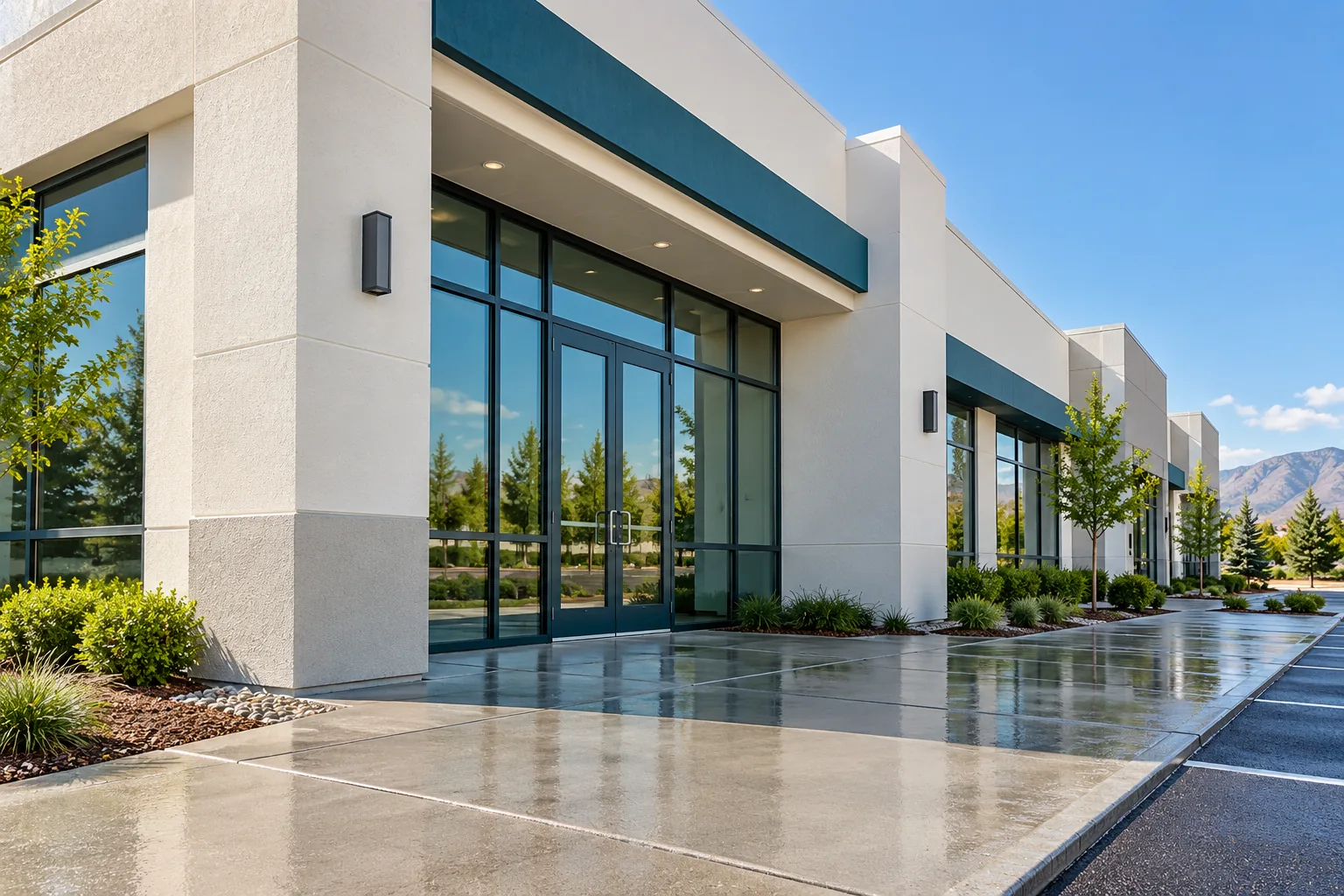
Building exterior washing
Stucco, block, brick, siding and trim washed clean of dust, grime and streaks.
View details
Guide
A facade scope turns a building into a clear list of walls, methods and checks. Here’s what belongs in one, elevation by elevation.
Printable template
A facade scope of work is the document that says exactly which walls get washed, how each one is treated, when the crew is on site and how the finished result is judged. Property managers write one when they want several bids built on the same footing, and boards and asset managers ask for one before they sign off on the spend. Without it, one bidder prices the street side and another prices all four elevations, and the numbers can’t be compared.
At Raincrest, the written quote for building exterior washing works as that document. It comes out of an on-site walkthrough, and it names every wall rather than promising to clean “the building.” To draft your own before that visit, start from the facade template at the top of this page, which comes as a PDF to print and a Word file to edit.
A good write-up breaks the building into its elevations, usually north, south, east and west, plus any courtyard walls, parapets or wings. For each one it lists the materials: painted or bare stucco, block, brick, tilt-up concrete, metal panels, siding and trim. Signs, columns, soffits, overhangs and the ceilings of covered walkways go on the list too, because they are easy to forget and obvious when skipped.
It also records what is on each wall. Road dust and exhaust film on the street side, dark runoff streaks under the roofline, green or black film on shaded north walls, droppings on ledges and cobwebs under the eaves each call for a different approach, so writing them down keeps the plan honest.
The method section pairs every material with how it will be washed. Raincrest matches the pressure to the surface: a gentler wash for painted stucco, signage, trim and older finishes, and more working power for bare concrete and block. Walls are washed from the top down so dirty water never runs over a section that is already clean, and streaks and shaded-wall film get slower, repeated passes instead of more force.
If a repaint is coming, the document says so. Painters want a clean surface, and a wash timed ahead of the paint crew is planned differently from a routine refresh.
Runoff belongs in writing, not in a conversation on the night. Before the first pass, the storm drains closest to the work are covered before any water goes down. Wash water is rinsed down and away from entrances, and once the walls are finished the walkways below get a rinse so the frontage looks complete. The drains are uncovered as the crew packs up.
List the drains, the entries and any low spots beside each elevation. That way everyone knows where water will travel before a hose is ever connected.
Next, the document explains how the crew reaches each wall. Lower walls are washed from the ground, while taller elevations need a lift, which adds setup time and belongs on the plan. The document should also note where the crew parks and stages, where the water hookup is, which gates and doors need unlocking and which entries stay open while the work moves around the building.
Raincrest works one elevation at a time, moving cones and signs as it goes, so tenants and visitors always have a clear way in.
Every facade has things that should stay dry or untouched. Doors, windows, vents, light fixtures and electrical boxes near the work are protected before washing starts. Planting beds below the walls are rinsed, and fabric awnings and painted signs get the gentle treatment their finish needs.
Name these items per elevation. A line that says “protect the main entry, the two wall packs and the transformer box on the east side” leaves no room for a missed step.
Facade washing usually happens early in the morning or over a weekend, before tenants arrive or while the property is quiet. Apartment communities often wash one building at a time with notice to residents, and office parks schedule around tenant hours. The write-up should give the date, the start time, the order of elevations and what tenants need to know beforehand.
Most buildings are washed once or twice a year, often in late spring once the pollen has fallen. Our seasonal exterior-cleaning calendar helps with that timing.
The last part defines what finished looks like. Each elevation is checked against its own line: walls even in tone, streaks gone, ledges and signs clean, protected items untouched and walkways rinsed. Raincrest supervisors check the work before the crew packs up, so a spot that needs another pass gets one that night.
After that, walk the building yourself in daylight with the document in hand. Keep the document on file, too. The next wash starts from the same list, with notes on which walls came back fastest. For a wider look at how a quote is laid out, see what a commercial pressure washing quote includes.
A few useful answers
Yes. Each elevation gets its own line with its materials, problem areas and method, so bids line up and nothing is left out.
Yes. Wall signs, monument signs, soffits, overhangs and covered walkways are washed with the walls when the list includes them.
The nearest storm drains are covered first, and water is rinsed away from entries.
A Raincrest supervisor checks each elevation before the crew leaves, and the property manager walks it in daylight against the same list.
Yes. The plan notes the repaint, so the wash is timed ahead of the painters and leaves every wall ready for primer.
Services
Facade work and tag removal are often written into the same plan.
01 / Facades
Stucco, block, brick, siding and trim washed clean of dust, grime and streaks.
View details02 / Graffiti
Tags and spray paint taken off walls, doors, fences and enclosures.
View details